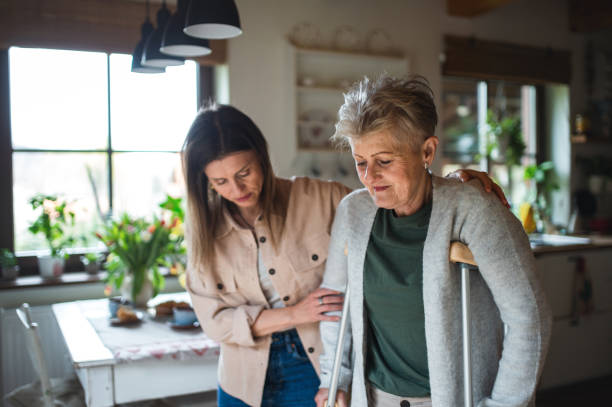
Caregiver assisting an elderly stroke survivor with mobility support at home using a walking aid.
A stroke changes life within minutes. Blood flow to the brain stops, and brain cells begin to die quickly. Survivors often face weakness on one side of the body, speech difficulty, swallowing problems, and reduced mobility. Recovery continues long after hospital discharge, which is why many families choose to hire a stroke Care Helpers to support daily care at home.
In Singapore, stroke remains one of the leading causes of long-term disability among older adults. Many survivors require months or years of structured rehabilitation. Hospital treatment stabilizes the condition, but daily repetition of exercises determines how much function returns. Consistent home support improves strength, balance, and independence over time.
Why Stroke Recovery Requires Structured Home Support
The first 3 to 4 months after a stroke are critical for progress. During this phase, the brain responds strongly to repeated physical and cognitive exercises. Patients must practice movement daily to rebuild muscle memory and coordination. Without structured routines at home, improvement slows and complications increase.
Family members often manage work, children, and caregiving at the same time. Many do not have training in safe transfer methods or physiotherapy support. Incorrect lifting or movement increases the risk of falls and injury. A stroke recovery helper Singapore families hire provides trained assistance to maintain safety and consistency.
What Is a Stroke Care Helper Singapore Families Can Hire
A stroke care helper Singapore households engage is a domestic helper trained to support rehabilitation and daily living needs of stroke survivors. She works under guidance from doctors and therapists and reinforces therapy routines at home. Her role focuses on mobility support, personal care, and safety monitoring. She strengthens the recovery process through structured daily support.
A maid trained for stroke patients understands how to assist with transfers from bed to wheelchair and how to guide walking practice safely. She maintains proper body positioning to prevent pressure sores and joint stiffness. She follows therapy instructions provided by physiotherapists and occupational therapists. Daily repetition improves muscle control and functional ability.
Core Responsibilities of a Stroke Care Helpers

Caregiver supporting an elderly woman during daily care routine at home.
A stroke care helper performs structured tasks that support both rehabilitation and daily living. Her role requires attention to detail, physical assistance, and consistent observation.
Rehabilitation and Physio Support
She assists with exercises prescribed by physiotherapists. These include a range of motion movements, balance training, and supported walking sessions. A physio-assist domestic helper ensures that exercises follow proper technique and frequency. Daily practice strengthens muscles, reduces stiffness, and improves coordination over time. For example, if a therapist recommends fifteen minutes of assisted walking twice a day, the helper supervises each session and records progress. This structured repetition improves stability and reduces fall risk. Consistency at home supports faster functional recovery compared to irregular practice.
Daily Living Assistance
Stroke survivors often struggle with bathing, dressing, feeding, and toileting. The helper supports these tasks while encouraging independence where possible. She uses safe transfer techniques to reduce strain on both patient and caregiver. Proper positioning during meals lowers choking risk for patients with swallowing difficulty. Clear routines help restore confidence and reduce frustration. When a patient practices dressing daily with guidance, motor skills gradually improve. Structured assistance preserves dignity and supports emotional well-being.
Medication and Health Monitoring
Medication adherence reduces the risk of another stroke. The helper reminds the patient to take medication at scheduled times and ensures doses are not missed. She observes changes in speech, alertness, or mobility and reports concerns to family members quickly. Early detection of warning signs allows faster medical attention. Monitoring daily habits such as appetite and fluid intake also supports overall recovery. Structured oversight lowers the risk of complications and hospital readmission.
Emotional and Social Support
Stroke affects mental health as much as physical ability. Survivors often feel frustration due to the sudden loss of independence. A consistent caregiver provides encouragement and companionship during daily routines. Emotional stability improves motivation to complete exercises and follow therapy plans. Social interaction reduces isolation and supports mental resilience. A calm and structured environment strengthens recovery outcomes.
Benefits of Hiring a Maid Trained to Care for Stroke Patients
Hiring a maid trained for stroke patients or with relevant experience creates measurable benefits.
- Daily reinforcement of therapy exercises
Improves mobility and muscle strength.
- Structured routines
Increase patient confidence and restore basic functions faster. Consistency supports progress during the critical early months of recovery.
- Reduced caregiver strain for family members
A stroke care helper Singapore families rely on also reduces caregiver strain. Family members no longer carry full physical responsibility for transfers and supervision. Reduced stress improves family stability and prevents burnout.
- Better long-term care stability
Balanced support helps maintain long-term care without compromising work or personal responsibilities.
- Improved safety at home
Safety improves significantly with trained assistance. Falls are common after a stroke due to weakness and poor balance. A trained helper supervises movement and ensures clear walking paths at home. Preventing falls protects against fractures and further medical complications.
How a Physio Assistant Domestic Helper Works With Therapists
Stroke care depends on teamwork. Doctors manage medical treatment, while physiotherapists and occupational therapists design rehabilitation plans. A physio-assist domestic helper implements these instructions at home through structured practice. She ensures that therapy routines continue daily instead of only during clinic visits.
For example, if speech therapy includes swallowing exercises before meals, the helper supervises practice consistently. If occupational therapy focuses on hand coordination tasks, she assists with repetitive activities such as gripping and releasing objects. This coordination between professionals and home care strengthens progress. Clear communication between family and therapists ensures goals remain aligned.
If you are exploring broader support options beyond stroke care, you can also read our guide on Hiring Caregivers in Singapore for the Elderly or Disabled to understand different caregiving arrangements available for long-term needs.
When Families Should Consider Hiring a Stroke Care Helpers
Families often hire a stroke Care Helper immediately after hospital discharge. Patients may need assistance with walking, feeding, and personal hygiene.
Families should consider hiring support when the following signs appear:
- Recurrent falls
- Muscle weakness affecting mobility
- Limited speech or communication difficulties
- Need for assistance with walking, feeding, and personal hygiene
These signs indicate the need for structured home support. Early intervention reduces complications and promotes steady recovery.
Another key indicator is caregiver fatigue.
- Providing full-time supervision is physically demanding and emotionally draining.
- A stroke recovery helper Singapore service protects both patient and family well-being.
- Structured care ensures continuity and stability.
Choosing the Right Stroke Care Helper Agency in Singapore
Choosing the right stroke care helper agency in Singapore directly improves the quality of care your loved one receives.
When selecting an agency, look for the following:
The caregiver should understand:
Discuss the following with the agency:
- Proven experience in eldercare and rehabilitation
- Caregivers trained or experienced in stroke patient care
The caregiver should understand:- Mobility assistance
- Fall prevention
- Safe lifting techniques
- Basic physiotherapy support
- Clear care planning before placement
Discuss the following with the agency:- Daily therapy routines
- Mobility goals
- Safety monitoring
This ensures expectations are clear from the start.
When you work with a responsible agency that provides proper training and ongoing support, your stroke Care Helpers can:
- Deliver structured rehabilitation
- Encourage daily progress
- Reduce caregiver stress
- Create a stable foundation for long-term recovery
Frequently Asked Questions (FAQ)
Q1: Who is a stroke care helper?
A: A Stroke Care Helper is a domestic helper trained or experienced to assist stroke survivors with rehabilitation exercises, mobility support, medication reminders, and daily living tasks at home.
Q2: How does a stroke care helper Singapore support physiotherapy?
A: She reinforces prescribed exercises such as walking practice, strength training, and range of motion routines. Daily repetition under supervision helps improve muscle control and coordination.
Q3: Is a maid trained for stroke patients medically qualified?
She is not a nurse or therapist. She provides support under guidance from doctors and therapists and follows structured rehabilitation plans.
Q4: What is a physio-assist domestic helper?
A physio-assist domestic helper supports physiotherapy routines at home by guiding exercises safely and consistently between clinic visits.
Q5: When should families hire a stroke care helper in Singapore?
Families often hire after hospital discharge, when mobility is limited, or when daily supervision becomes overwhelming for family caregivers. Some families hire helpers 1-2 weeks before hospital discharge, so that they can send the helpers to a hospital/ rehab centre to be trained by nurses and therapists to provide necessary care for stroke patients.
The Right Support Makes Recovery Possible
Stroke recovery is a long journey that requires structure, repetition, and emotional support. Hospital care stabilizes the patient, but daily home practice drives meaningful improvement. A stroke care helper provides consistent rehabilitation assistance, mobility support, and safety monitoring in a familiar environment.
If you hire a stroke care helper, you can keep things going between medical care and everyday life. A well trained or experienced maid helps stroke patients both physically and emotionally. With the right help and teamwork, recovery becomes more organized and long-lasting for the whole family.
Explore more with Green Employment Singapore
Green Employment is a Singapore-licensed maid employment agency committed to connecting caring, skilled domestic helpers with families and households across Singapore. We focus on ethical and sustainable recruitment practices that create positive, long-lasting relationships between employers and helpers—guided by professionalism, accountability, and compassion.
With years of experience in the domestic helper industry, our team helps you every step from consultation to placement, whether you’re hiring for the first time or need a transfer or direct hire solution. Our approach emphasizes clear communication, personalized matching based on your needs, and ongoing support throughout the employment journey.
Discover How Green Employment Can Help You Find Trusted Help:
- Free personalized consultation to understand your household needs.
- Domestic helper placements including Indonesian, Filipino, or Myanmar helpers.
- Transfer or direct hire services with compliance and documentation support.
- Post-placement support to ensure long-term satisfaction.
Contact Green Employment Pte Ltd (MOM EA Licence: 21C0720) today.
- Toa Payoh Office: Blk 116 Lorong 2 Toa Payoh, #01-152, Singapore 310116.
- Serangoon Office: Blk 152 Serangoon North Ave 1, #01-344, Singapore 550152
Email: This email address is being protected from spambots. You need JavaScript enabled to view it.
Phone: +658030 6663
Follow Green Employment Singapore:
- Website: https://www.greenemployment.sg/
- Contact Us : https://www.greenemployment.sg/contact-us
- Facebook: Search “Green Employment Singapore” for updates and tips!
Start your household support journey with trusted guidance and care—let Green Employment help you find the right helper for your home.
Effortless Hiring Process
.jpg)
Tell us what you're looking for, and we'll do the rest. We provide professional, friendly service with a quick response time.